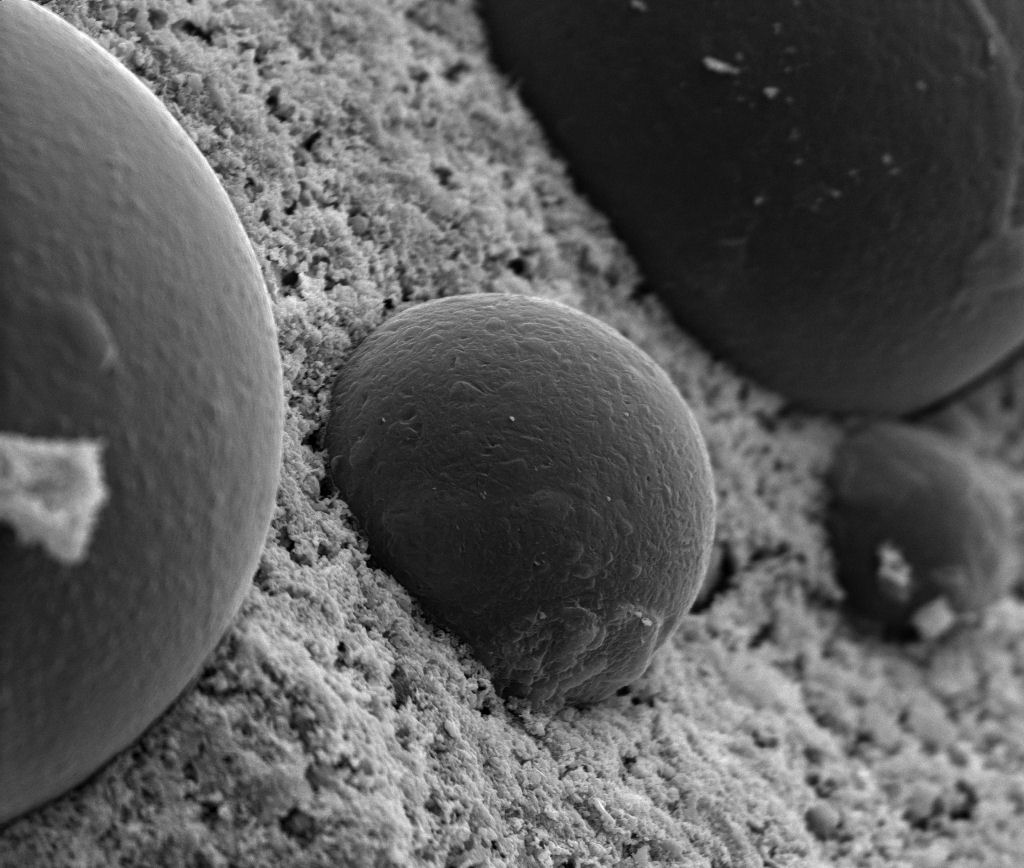
We support our industry partners in all matters related to materials engineering and process technology for non-metallic inorganic materials, particularly structural and functional ceramics, but also sinter-based processing of ceramic-metal composites and powder metallurgy. Our expertise covers the entire development chain – from material synthesis and processing, through pressure-assisted and pressureless sintering technologies, to the comprehensive characterization of material, component, and part properties.
Our portfolio includes not only bulk materials but also functional (thin) films and systems with functional porosity. With in-depth knowledge of powder processing and a wide range of sintering technologies, we offer our industrial partners comprehensive material characterization with respect to structural, (fracture-) mechanical, and physical properties.
Our industry service contracts are ran via the KIT Campus Transfer. If you are interest in our services, please contact Prof. Dr.Sc.Eng. Furlan - head of the Institute for Applied Materials - Ceramics and Technologies (IAM-KWT) – per E-mail.
| Powder preparation | Shaping | Sintering |
|---|---|---|
|
|
|

|

|