

Multiphysics Modules
Phase-field
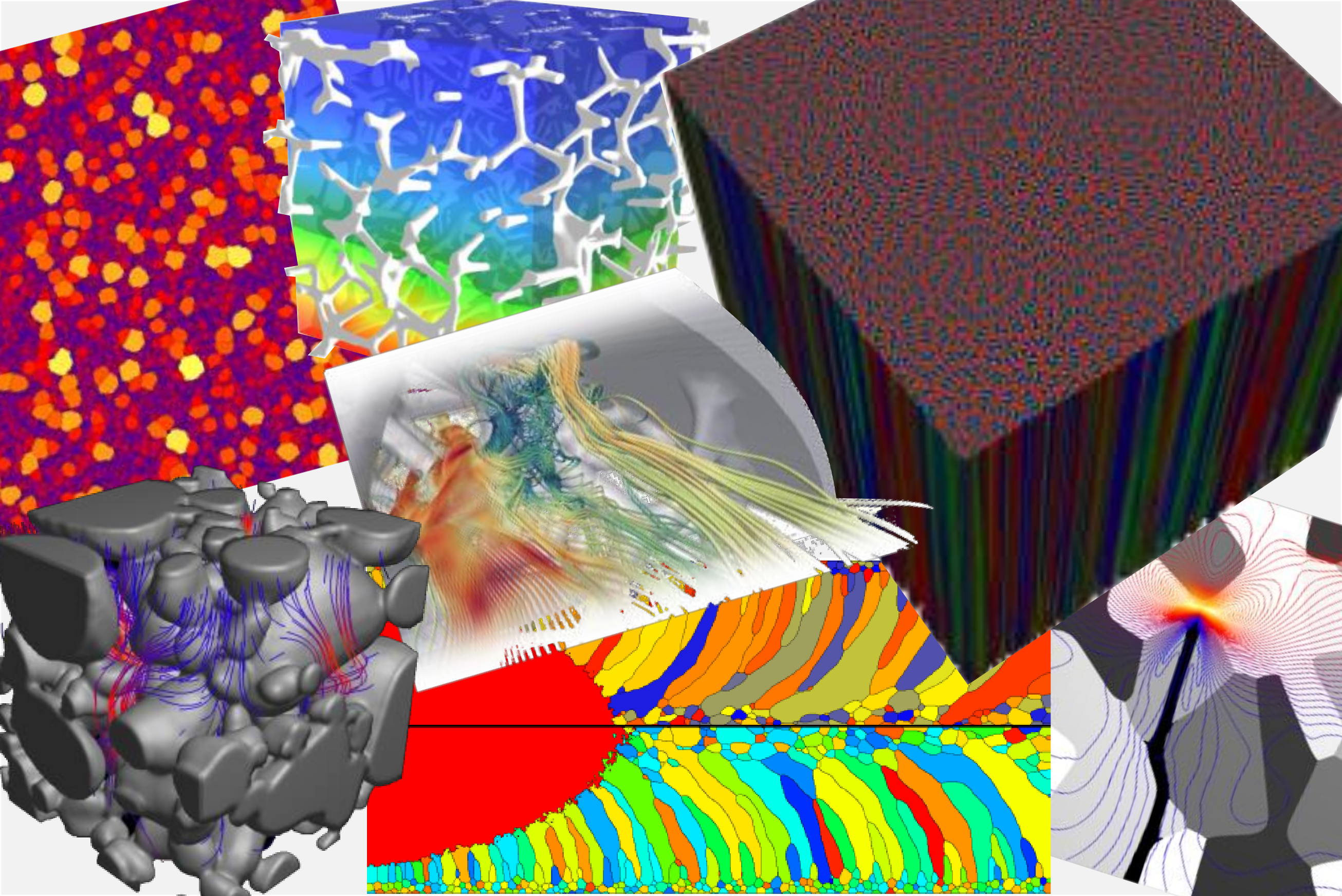
 Phase-field modelling has become a versatile method for predicting microstructural evolution and phase transformations in complex materials systems. The Pace3D simulation framework provides a high-performance, massively parallel implementation of a generalized multi-phase-field model, enabling efficient large-scale simulations on modern HPC architectures.
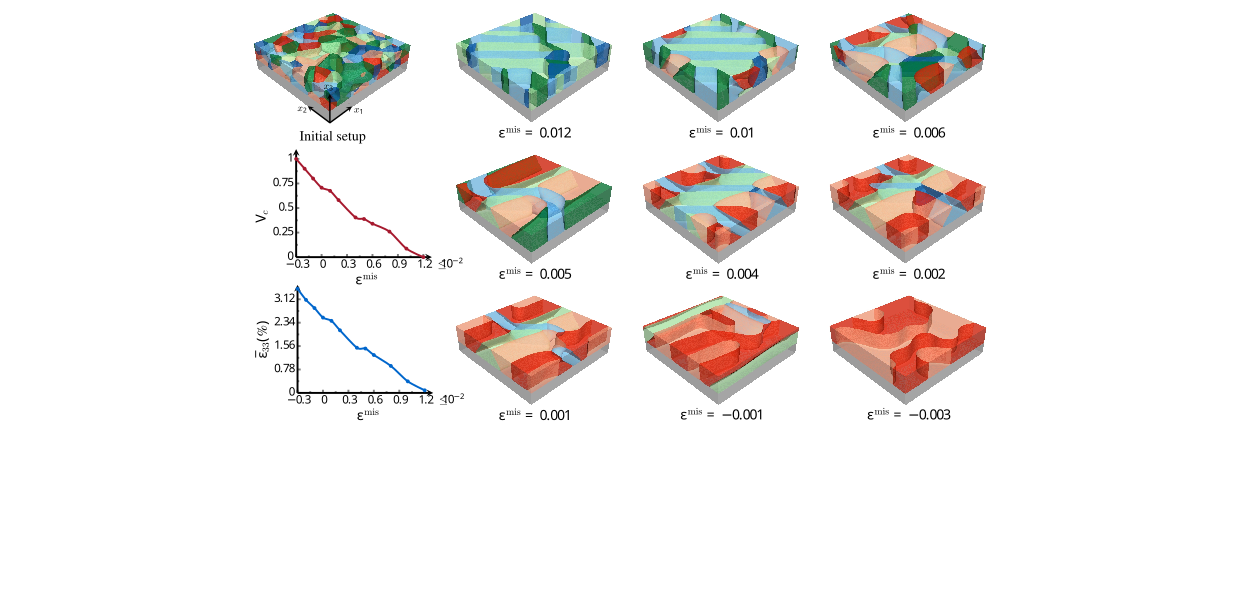
Pace3D solves the evolution equations of an N-order-parameter phase-field formulation, allowing the treatment of multi-phase material systems as well as polycrystalline grain and particle structures. The order parameters may represent phases (solid, liquid, gas) or individual crystals, providing a flexible framework for a wide range of applications.
To achieve fast time-to-solution, Pace3D combines advanced model reductions, numerical optimizations, and MPI-based parallelization. The framework has been continuously developed for more than 25 years and is supported by numerous benchmark applications, validating interfacial dynamics as well as triple- and multi-junction behavior.
With its proven scalability, physical fidelity, and long-term development history, Pace3D offers a reliable platform for predictive phase-field simulations in industrial and scientific environments.
Diffusion & Grand Chem
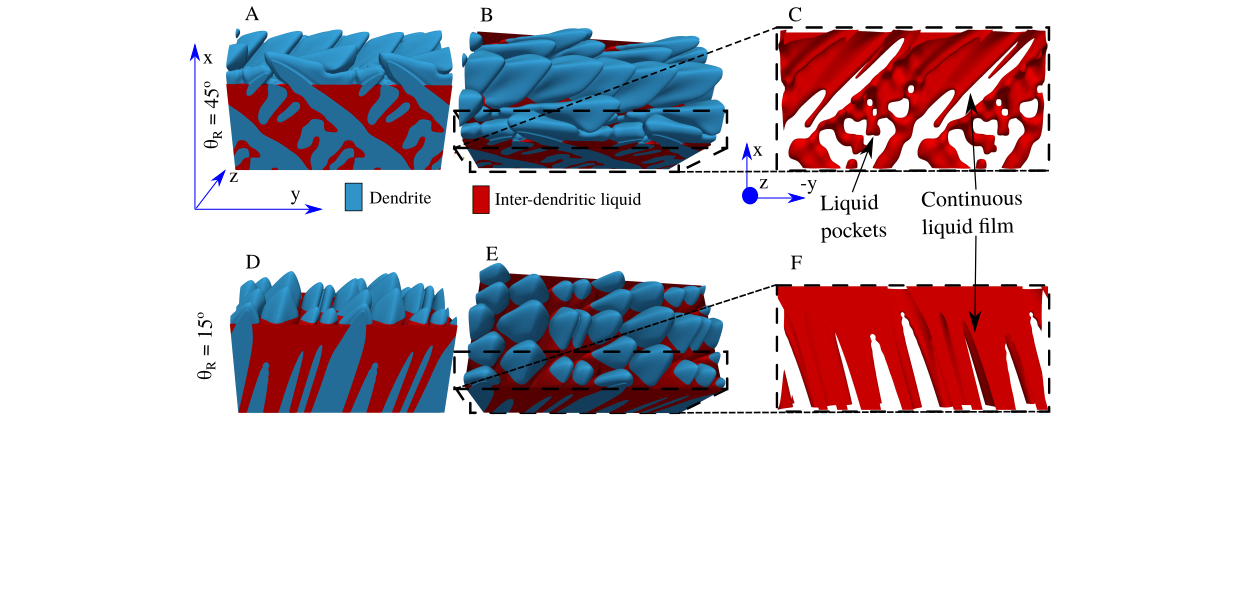
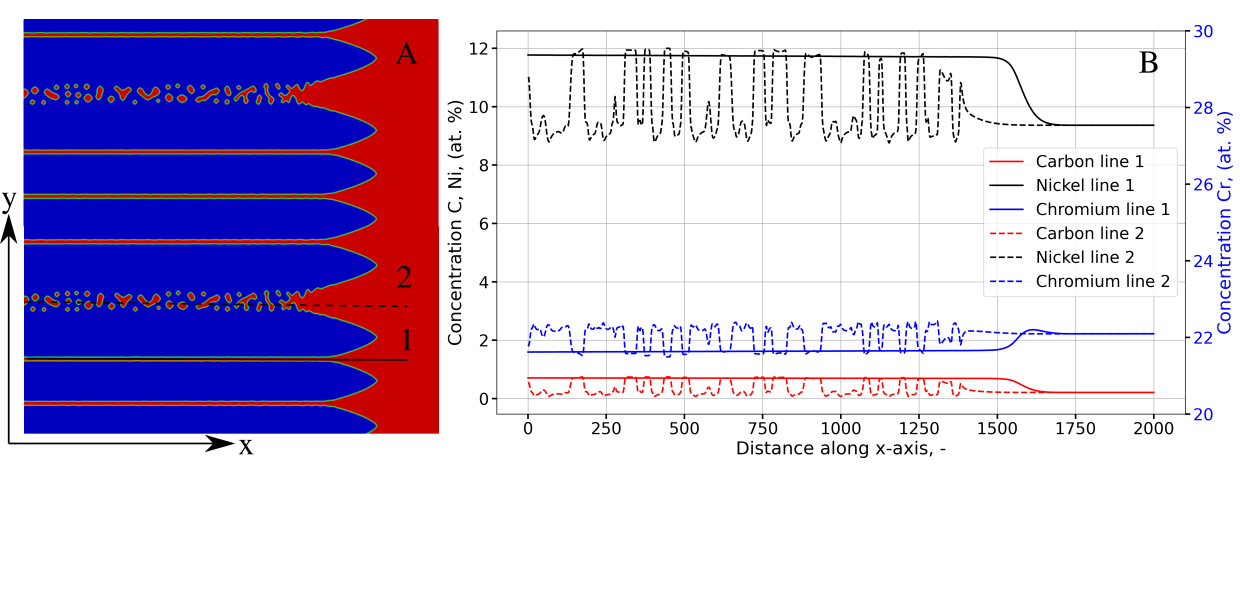
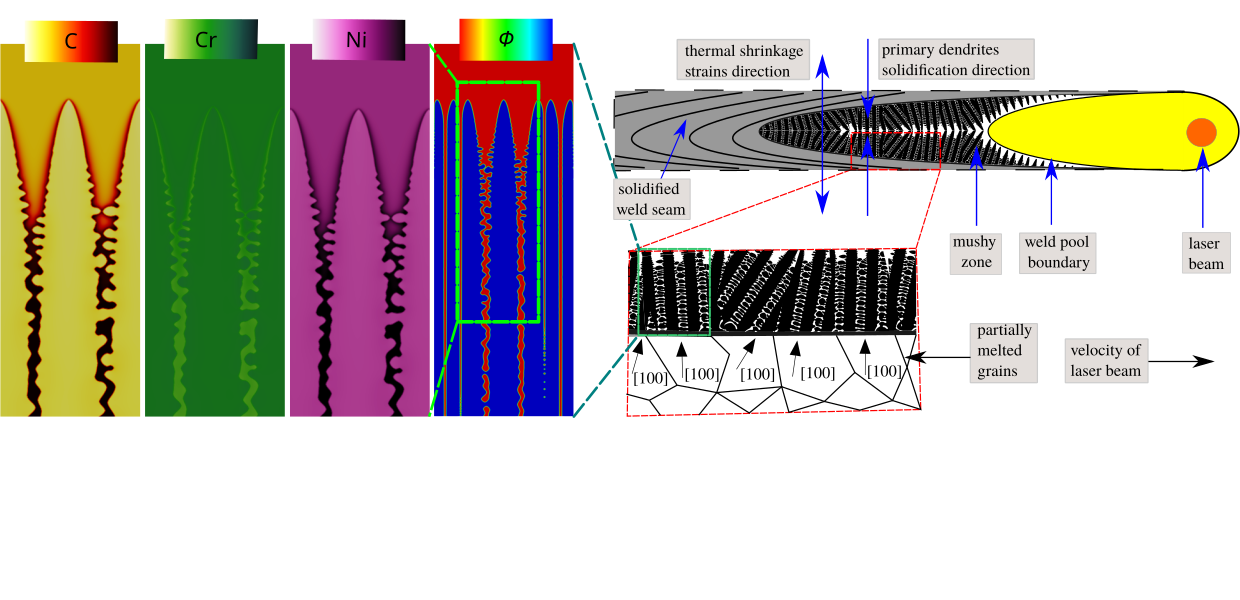
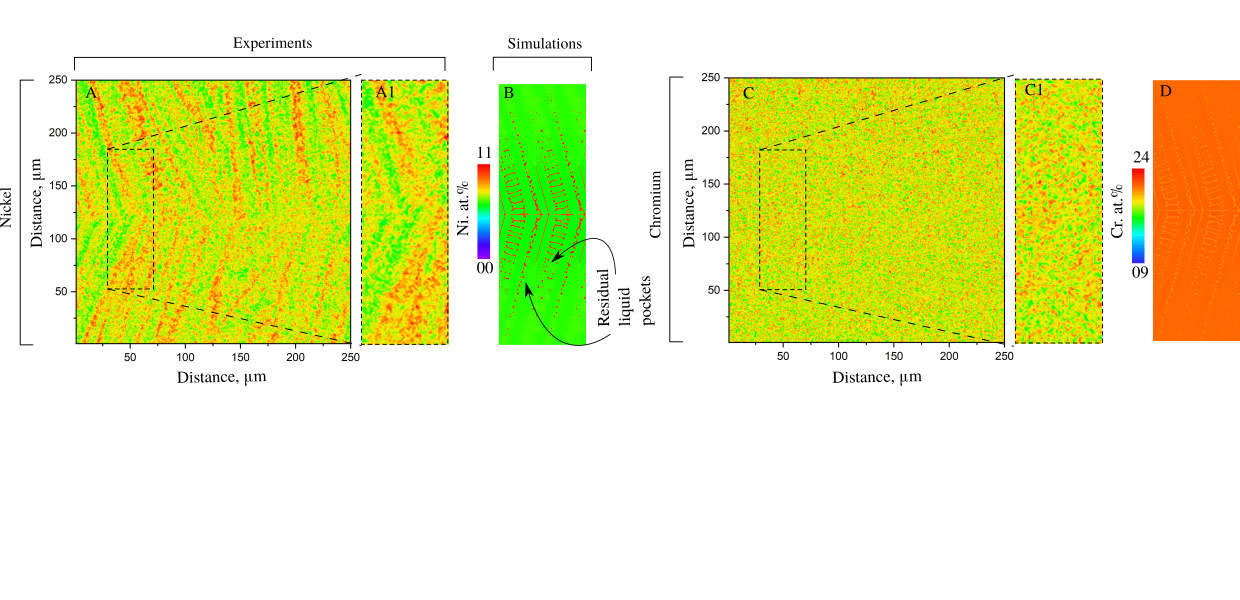
Grand chemical potential-driven morphological patterns—such as those in solidification, grain coarsening, and solid-state transformations—along with diffusion processes distinguishing surface, grain boundary, and bulk pathways, are primarily investigated using multi-component, multi-phase-field simulations for industrially relevant alloy systems, including steels, Al-, and Ni-based alloys. CALPHAD-based Gibbs energy functions provide realistic microsegregation predictions for critical elements, differentiating interstitial diffusion (e.g., carbon, boron) from substitutional diffusion (e.g., manganese, nickel). These capabilities advance alloy design, defect identification, and industrial manufacturing optimization.
Heat transfer
Pace3D includes a solver module for heat transfer that can be coupled with phase-field evolution as well as with other solver modules such as solid mechanics and computational fluid dynamics. This enables the simulation of strongly coupled thermo-physical processes. The module accounts for latent heat release during phase transformations and allows the consideration of thermo-mechanical effects through coupling with solid mechanics. In addition, convective heat transport in fluid flow can be modeled through its integration with the CFD solver, enabling consistent treatment of heat transfer in multiphysics simulations involving solids, fluids, and evolving microstructures.
Fluid dynamics
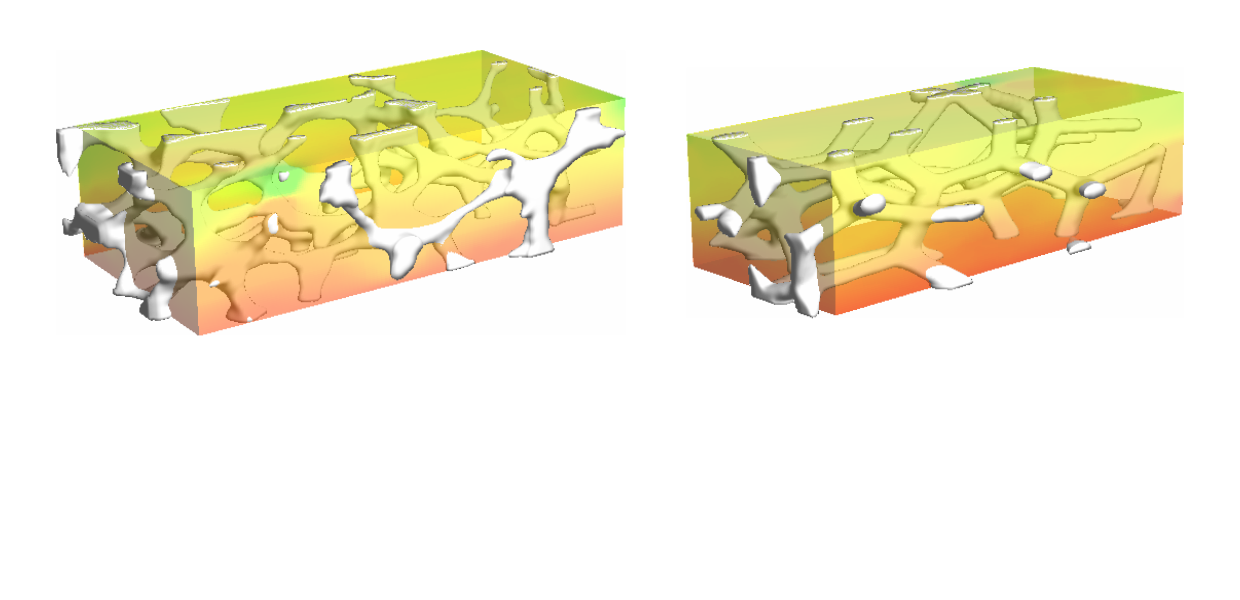
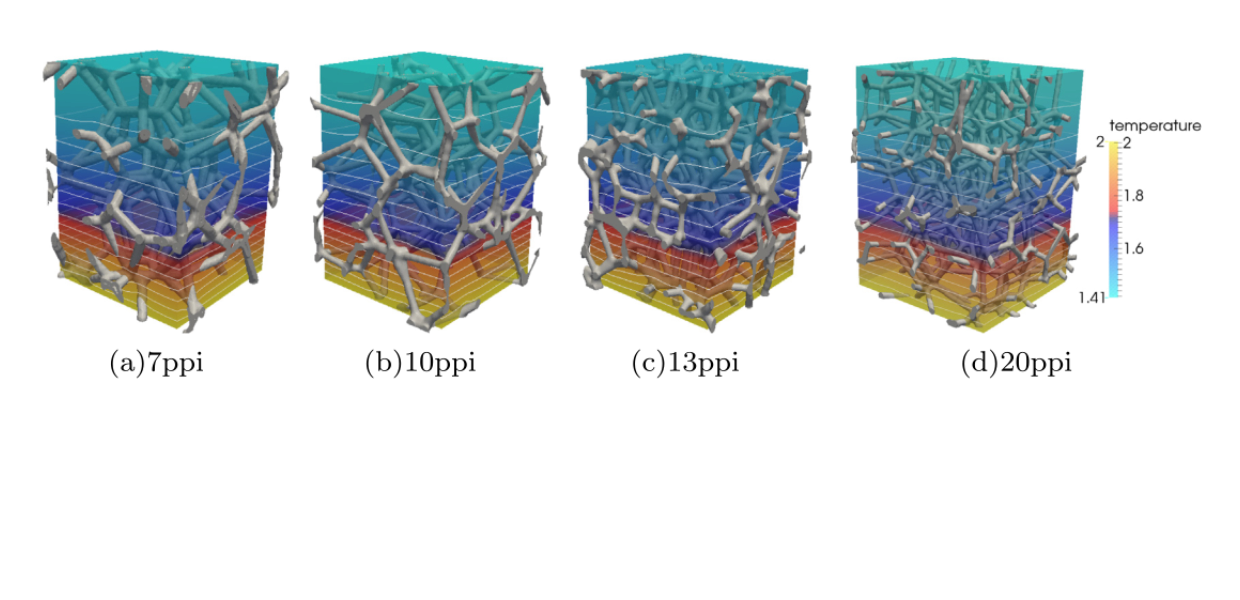
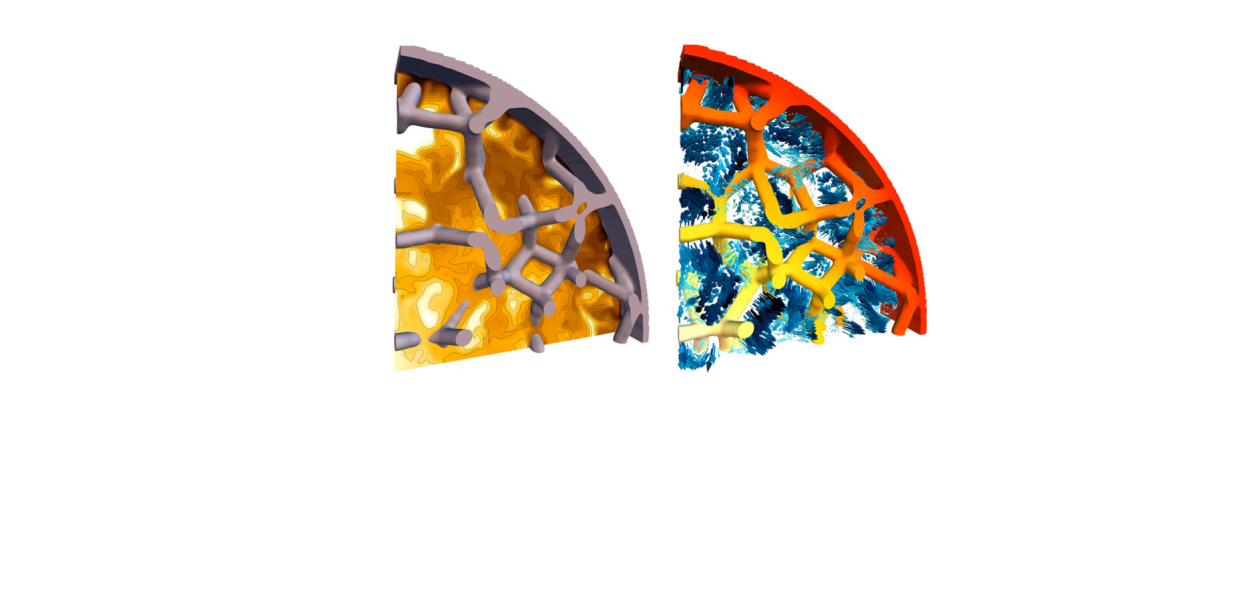
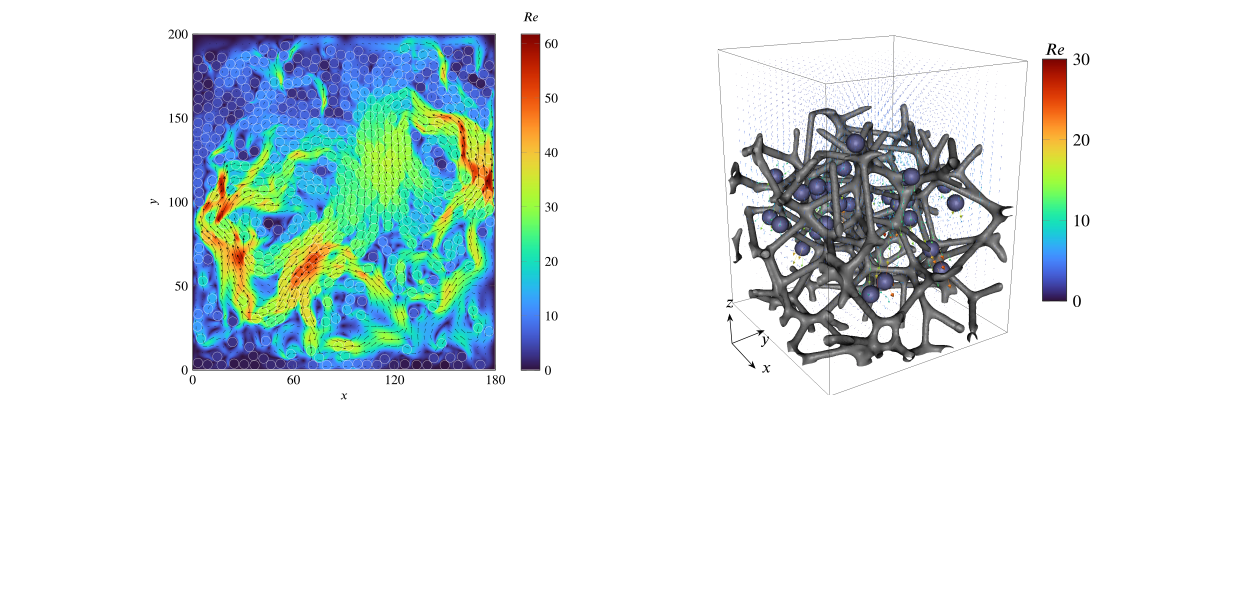
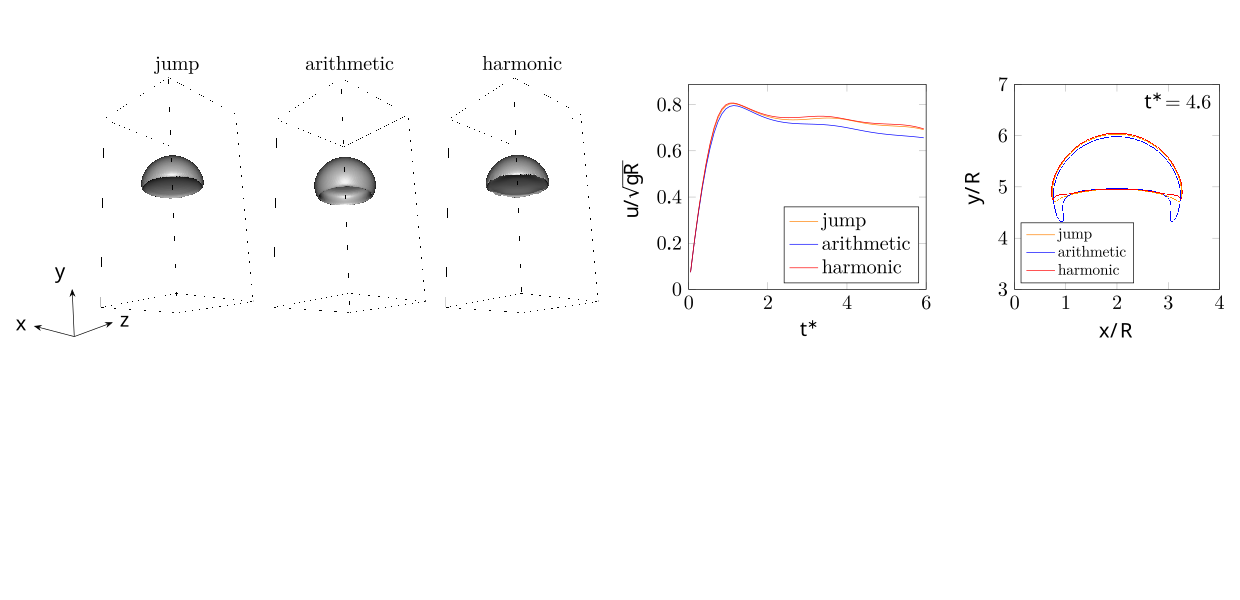
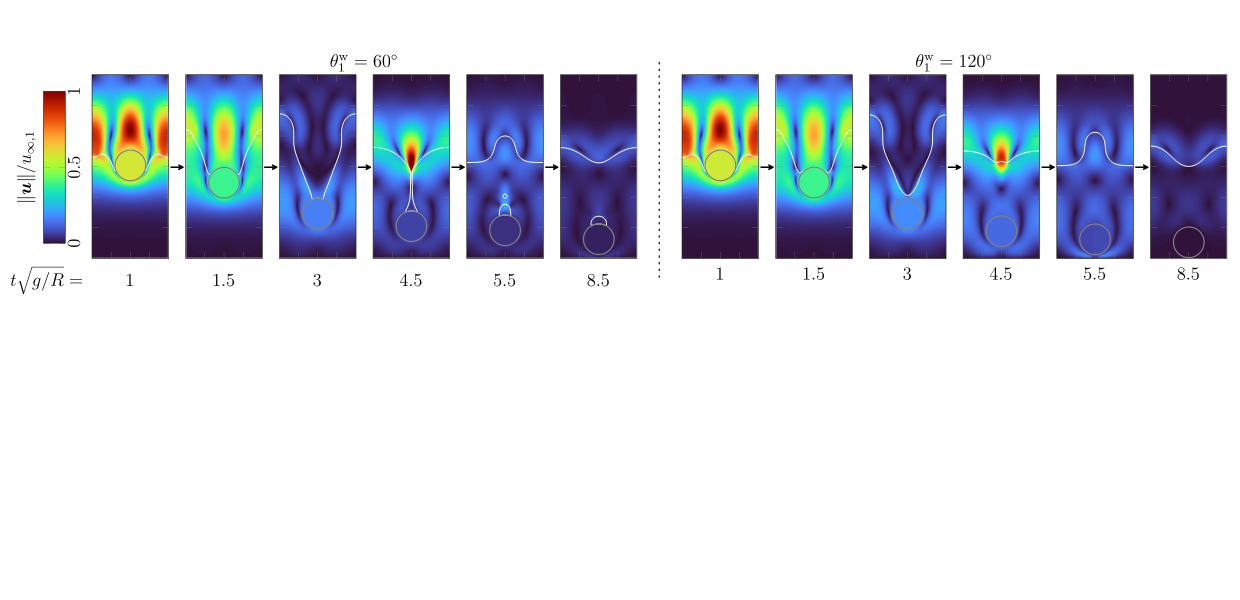
Pace3D includes a computational fluid dynamics (CFD) solver module that provides both a Lattice–Boltzmann solver and a Navier–Stokes solver. These approaches are coupled with the phase-field method, enabling simulations of a wide range of multiphase flow problems. Fluid and solid regions can be treated within a single computational domain using a diffuse-domain formulation. The framework supports macroscopically immiscible multiphase flow through a continuum surface force model capturing capillary effects. It further includes a solver for rigid particulate flows based on a phase-field fictitious-domain approach. In addition, porous-media flow can be modeled using a Brinkman–Forchheimer formulation, and thermal effects are incorporated via temperature-dependent viscosities and the Boussinesq approximation.
Mechanics
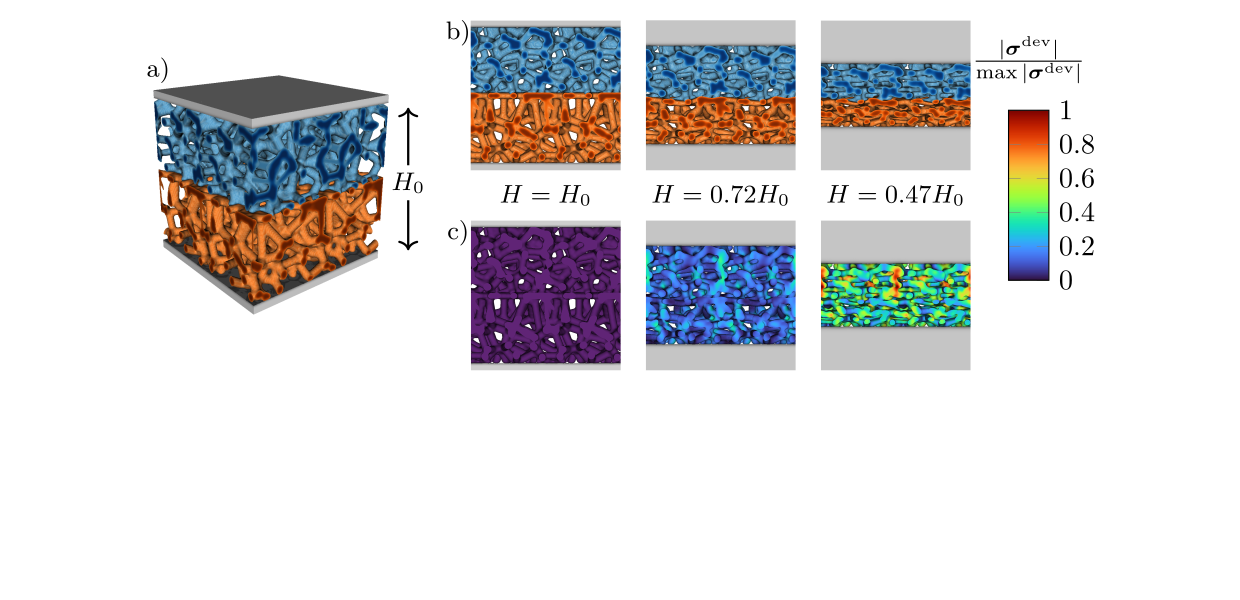
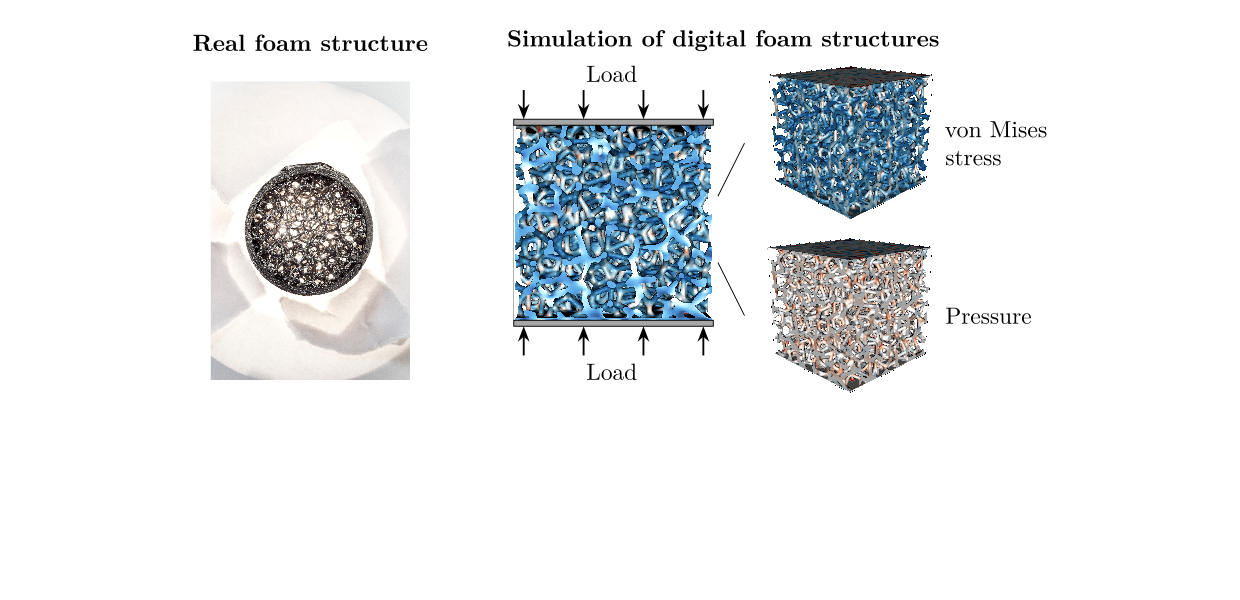
Continuum-mechanical modeling is essential for predicting stress evolution, deformation, and failure in complex materials. The Pace3D simulation framework provides a high-performance, massively parallel mechanics solver embedded in a generalized multiphase-field environment. It solves the balance of linear momentum consistently coupled to evolving microstructures, enabling simulations of elastic and inelastic deformation in multiphase and polycrystalline systems. The framework supports small- and finite-strain formulations as well as thermo-mechanical and chemo-mechanical couplings, capturing diffusion-induced stresses, eigenstrains, and microcrack formation within a unified variational setting. Advanced numerical schemes, consistent interface treatments, and MPI parallelization ensure efficient simulations. The solver has been validated against analytical benchmarks and chemo-mechanical test cases, providing a scalable platform for predictive multiphysics simulations.
Electrochemistry
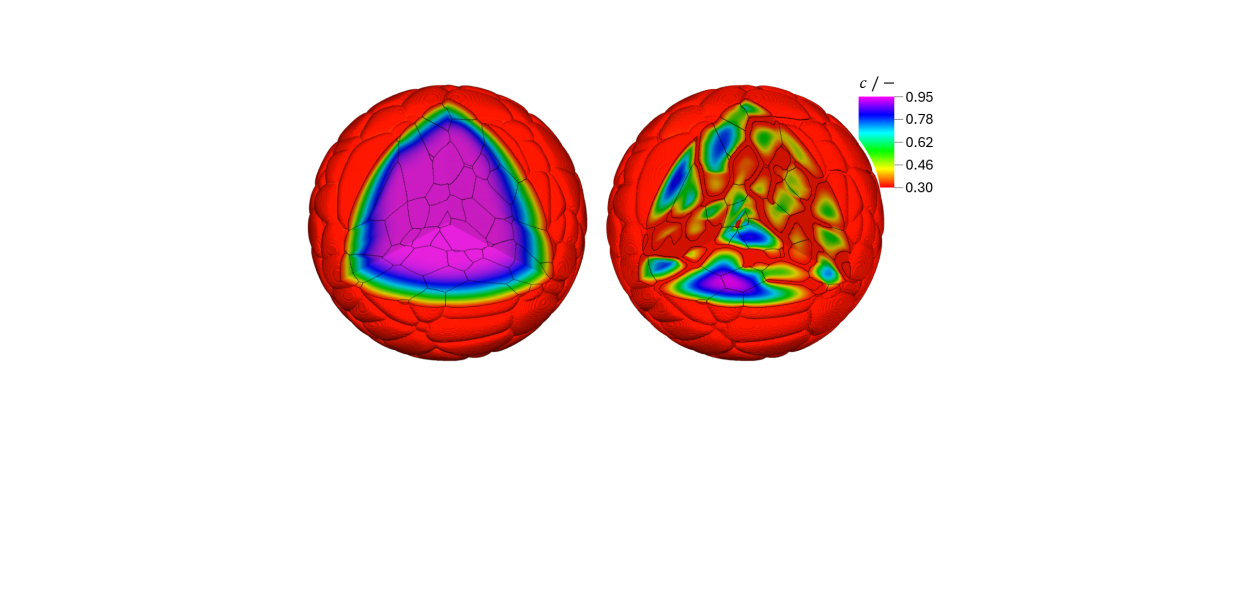
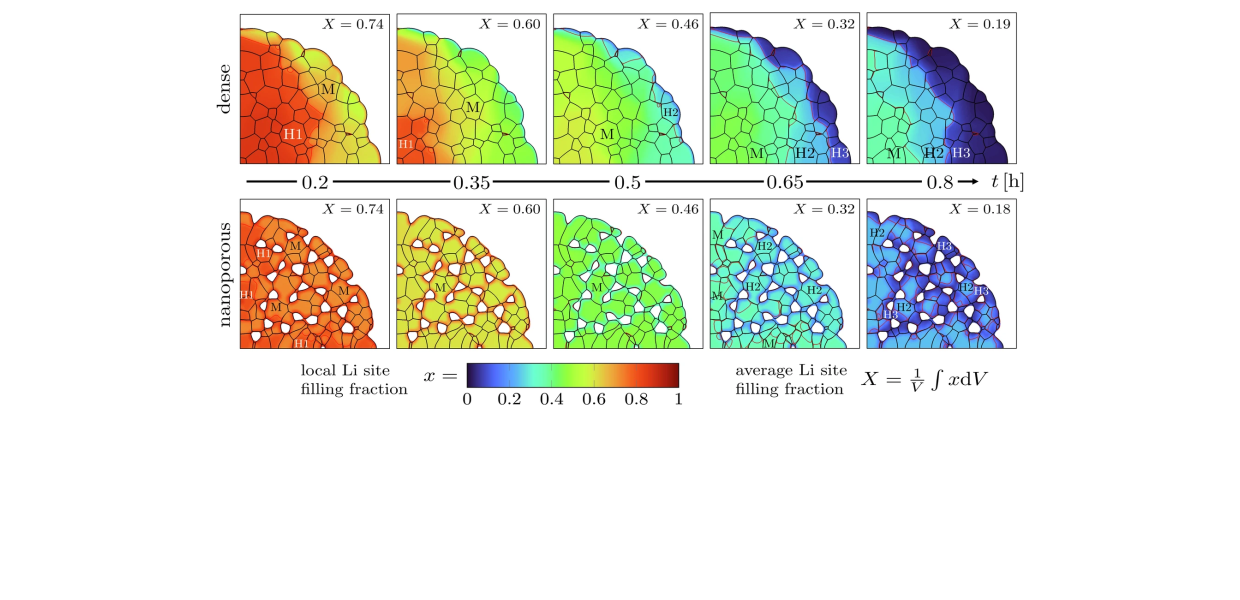
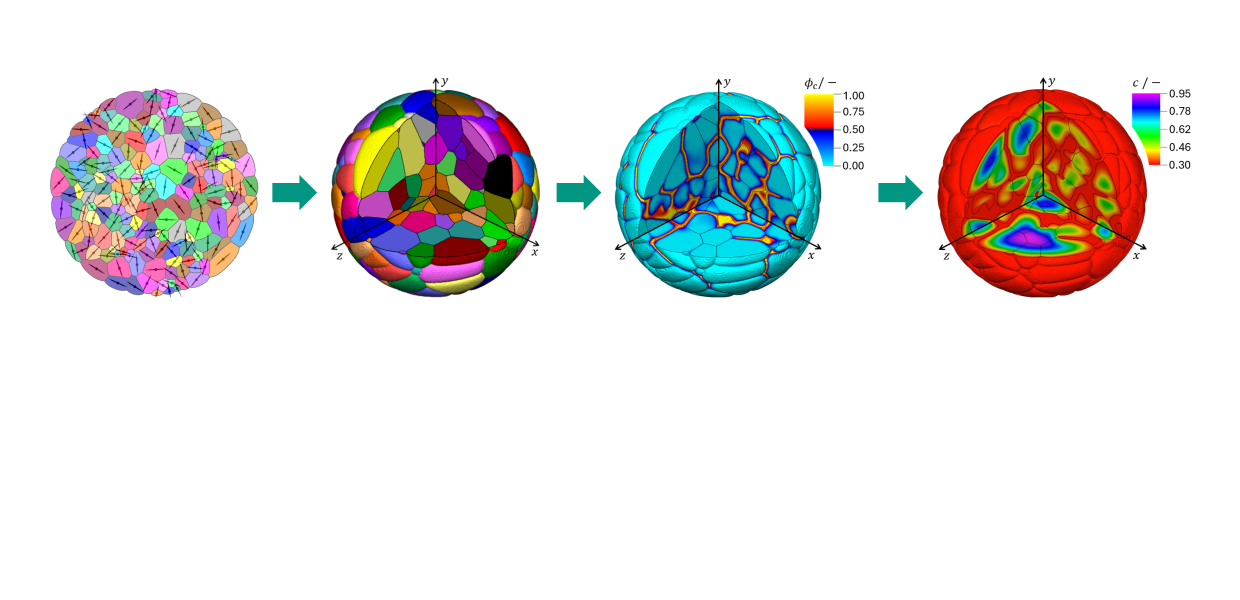
Fast charging and long-term durability of battery electrodes are strongly governed by their microstructure. During electrochemical cycling, ion intercalation drives phase transformations, concentration gradients, and the evolution of mechanical stresses that can ultimately lead to microcrack formation.
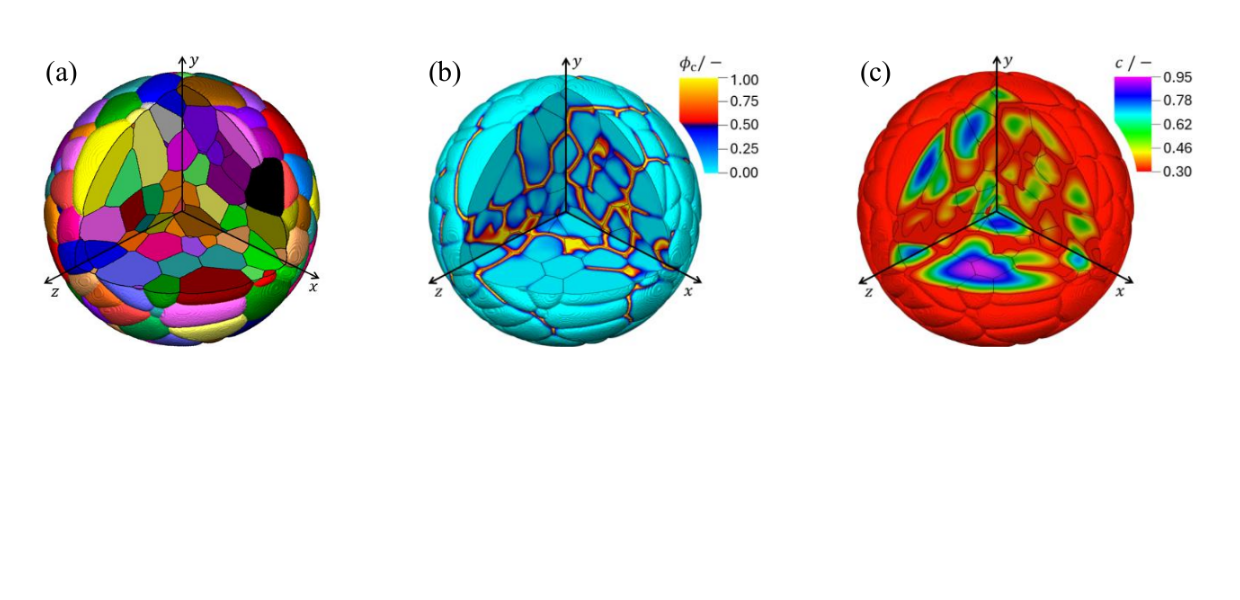
Our multi-physics battery framework enables modelling of these processes in artificial as well as real 3D microstructures. It captures anisotropy of ion diffusion and chemo-mechanics, as well as the resulting microcrack formation. This provides detailed insight into how features such as primary and secondary particle size, texture and interfaces influence performance and degradation.