
Project 4: Thermomechanical properties of ceramic-nanocomposite-based monoliths and coatings
Doctoral researchers
Dr.-Ing. Yangyiwei Yang (1st cohort)
Dr.-Ing. Mozhdeh Fathidoost (2nd cohort)
M. Sc. Arthur Bernhardt (3rd cohort)

Supervisors
Prof. Bai-Xiang Xu,
Prof. Karsten Albe
Project
In the first cohort of RTG 2561, a diffuse-interphase computational homogenization model was established to determine the effective thermal conductivity (keff) of complex PDCs, addressing the interface thermal resistance (Rs) through the diffuse-interphase method [1]. Furthermore, this model was employed for the sensitivity analysis of particulate ellipsoidal composites, aiming to determine the key geometrical and thermal properties that define the keff of such composites [2]. Afterward, by integrating both modeling and experimental results at different temperatures and Rs, the value of Rs were extracted in our material system, Si(Hf,Ta)C [3].
The second cohort project has established a SPR through the application of data-driven approaches and ML. This involved utilizing diverse synthetic microstructure images of Si(Hf,Ta)C alongside their corresponding calculated effective conductivity (keff) as the dataset [3].
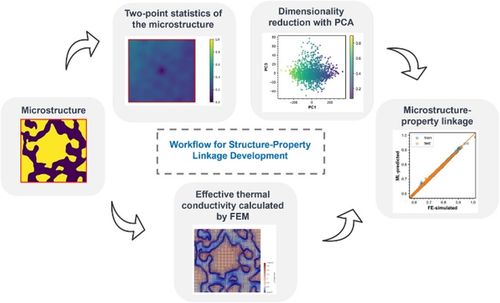
Fig. 1: ML-based structure–property relation development workflow
Project P4.3 (3rd cohort) aims to develop a thermo-visco-elastic model for polymer-derived nanocomposite ceramics (PDCs) within a homogenization-based finite element framework. The goal is to link microstructural features, especially porosity and interfaces, to the effective thermal and mechanical behavior of the material. The simulation results will also be analyzed with machine learning methods to identify relevant structure–property relationships and support material optimization.
The project is organized as a connected workflow in which each step builds on the previous one. It starts with three-dimensional thermal simulations of porous microstructures, based either on image-based reconstruction or synthetic microstructures generated with GeoDict. By varying porosity and pore morphology, the influence of pores on effective thermal conductivity is investigated. In addition, inverse identification is used to determine the thermal properties of the solid phase by matching simulation results with macroscopic measurements. The simulation setup is validated through convergence studies and by assessing different pore geometry approximations, such as ellipsoidal or polygonal descriptions.
Based on these results, the second stage extends the analysis to thermo-mechanical simulations including viscoelasticity. Here, the refined pore-based description of the PDC microstructure is used to study the coupled effects of temperature, deformation, and time-dependent material behavior. The aim is to capture how porosity influences stiffness, stress development, and viscoelastic response under thermo-mechanical loading.
In the final stage, the developed material models are applied to a sandwich structure consisting of a porous PDC layer, an interface layer, and a metallic substrate. This part focuses on a more sophisticated description of the interface in order to simulate the full system under realistic thermo-mechanical conditions. In this way, the effective properties identified in the earlier stages are transferred to the structural level and used to assess the overall behavior of the multilayer system.
References
[1] Y. Yang, M. Fathidoost, T. D. Oyedeji, P. Bondi, X. Zhou, H. Egger, B.-X. Xu, A diffuse-interface model of anisotropic interface thermal conductivity and its application in thermal homogenization of composites, Scr. mater. 212 (2022), 114537, doi:10.1016/j.scriptamat.2022.114537.
[2] M. Fathidoost, Y. Yang, M. Oechsner, B.-X. Xu, Data-driven thermal and percolation analyses of 3D composite structures with interface resistance, Materials & Design 227 (2023), 111746, doi:10.1016/j.matdes.2023.111746.
[3] M. Fathidoost, Y. Yang, N. Thor, J. Bernauer, A. Pundt, R. Riedel, B.X. Xu, Thermal conductivity analysis of polymer‐derived nano‐composite via image‐base structure reconstruction, computational homogenization and machine learning. Adv. Eng. Mater. 26 (2024), 2302021, doi:10.1002/adem.202302021.